
- 05
- Aug
Why Some Speakers Impress but Never Impact I How to Communicate with Focus, Clarity and Confidence
Why Some Speakers Impress but Never Impact I How to Communicate with Focus, Clarity and Confidence
Why great communication is not just about speaking well, but speaking purposefully
We’ve all seen it — someone with a powerful voice, clear pronunciation, and an impressive vocabulary, yet their message fails to land. Why does this happen? Because the conversation loses direction. The speaker drifts. The message weakens. The connection fades. Even experienced communicators — including corporate leaders, trainers, and performers — can struggle to stay focused during long conversations, presentations, or meetings. So, what truly separates an effective communicator from the rest? Let’s explore the science, the storytelling, and the strategies behind this critical but often ignored skill.
 The Problem: Good Speaker, Poor Navigator
Many believe that good communication is about having a rich vocabulary or speaking fluent English. But that’s just surface-level. Effective communication is not just about style. It’s about structure, focus, and the ability to guide the conversation with clarity.
Have you noticed?
Some speakers jump from one topic to another with no clear transition. Others begin well but end up answering a completely different question. Some provide excessive background and miss the main message.
The result? The listener feels lost. The message is diluted. Time is wasted.
 The Research: Why Staying on Track Matters
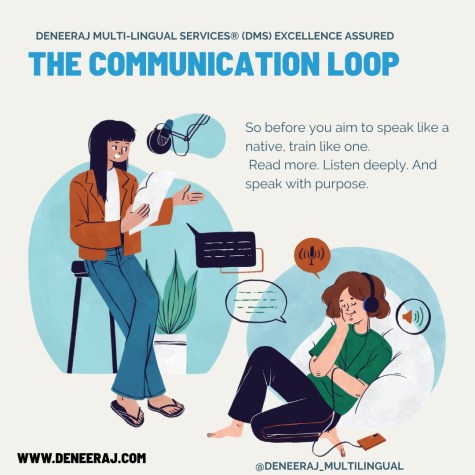
A 2022 Harvard Business School study found that the most persuasive speakers weren’t the ones with the best vocabulary or voice — they were the ones who maintained topic continuity and used strategic pauses to reinforce their message. A 2021 report in the Journal of Applied Psychology revealed that message coherence directly impacts trust and memory retention among listeners. If you stay on message, your message stays with them.
Start With a Clear Purpose Statement
Every conversation — whether it’s a meeting, training session, or presentation — should begin with a clear purpose. Example: “In this conversation, I want to focus on three simple ideas…” This sets expectations and keeps you accountable. If you feel yourself drifting, return to your purpose anchor.
Use the ‘Circle Back’ Method
If you go slightly off-topic, don’t panic. Use loop-back phrases to return to your main point:
- “Now bringing it back to what we were discussing…”
- “This connects to my main point, which is…”
- “To tie this in with our focus…”
This demonstrates clarity of thought and shows your audience that you are still leading the conversation.
Use a Verbal Structure
Great communicators use verbal frameworks to stay organized and focused.
Here are a few tried-and-tested formats:
- Rule of 3: “Here are three things we must remember…”
- Problem–Cause–Solution: “The issue is… this happened because… we can fix it by…”
- Past–Present–Future: “Earlier we did…, now we’re seeing…, so next…”
These formats naturally guide your audience through your message.
Respect Time, Set Time
Over-explaining can be just as harmful as under-explaining. Use time markers to stay efficient and keep attention: “In the next 3 minutes, let me break down the steps…” This sets expectations and ensures your listener stays engaged.
Practice Active Listening in Conversations
Effective communication isn’t just about talking — it’s about listening. Practice active listening so your responses stay relevant and grounded. Use follow-up questions:
“Can you tell me more about that?” Paraphrase for clarity:
“So if I understand correctly, you’re saying…”
This keeps both you and your listener in sync and on topic.
Communication in Personal Relationships: Stay on Track with the People Who Matter
Whether you’re speaking with a partner, a close friend, or a new acquaintance, the principles of focused communication apply just as strongly in personal relationships. We often get carried away — especially when emotions are involved. But drifting off-topic, bringing up unrelated past issues, or over-sharing too soon can lead to confusion, frustration, or even conflict.
Here’s how to stay grounded:
- Set the tone early: “I just want to talk about what happened earlier today…”
- Stay emotionally aware: Notice when you’re veering into blame, old arguments, or generalizations.
- Use gentle redirection: “I understand that’s also important, but let’s stay with what we’re trying to solve right now…”
- Don’t try to win — try to understand: Communication isn’t a contest; it’s a connection.
In new relationships, being intentional about what you share — and when — builds trust and respect. Focused communication shows maturity, empathy, and emotional intelligence.
Storytelling Example: The CEO Who Lost the Room
During a leadership offsite, a senior CEO began his talk with a powerful message about driving innovation. But 15 minutes in, he was talking about college memories, employee issues, and a bad flight experience. While each anecdote was “interesting,” none of it was aligned with the core message. Team members later said: “We’re not sure what the point was.”
A powerful voice without a clear direction fails to deliver.
The DMS Approach: From Words to Structure
At Deneeraj Multi-lingual Services® (DMS), we don’t just train people to speak — we train them to communicate with clarity and structure.
Under the leadership of Mr. Neeraj K, our programs include:
- Structuring thoughts for clear messaging
- Managing real-time distractions
- Delivering focused, emotionally intelligent communication
- Practicing interpretation to improve message retention
Our philosophy is simple:
“A good communicator doesn’t say everything—they say what matters.”
- Fluency without focus is not effective communication
- Use structures, time markers, and verbal anchors to stay on message
- Apply storytelling and logic to guide your audience
- Learn to listen better, not just speak better
- Invest in structured communication training to build your skill set
Want to Be a Communicator Who’s Heard and Remembered?
Whether you’re a student, team leader, entrepreneur, trainer, or public speaker —
DMS can help you communicate with power and purpose. Contact us today for personalized coaching in voice, accent, speech clarity, and structured communication.
You’re only as effective as How You Communicate I Neeraj K I Voice and Accent Training I US and UK Accent Coaching I Accent Dialect Coaching
UK Accent Coaching, on the other hand, focuses on Received Pronunciation or regional British varieties. You’ll work on sharper ‘T’ sounds, non-rhotic R’s, and vocabulary, pitch, and pacing typical of British speakers. Ideal for those interacting with UK audiences, or engaged in voice-over or academic work.
Public Speaking & Presentation Skills
Public speaking and presentation training help you structure your ideas, manage stage presence, and engage your audience with confidence. You’ll learn to control your voice, gestures, posture, and eye contact — all of which improve how your message is received.
Storytelling: The Soul of Communication
Storytelling makes your message emotional, relatable, and powerful. It turns data into meaning and facts into impact. Whether you’re speaking in a meeting, a classroom, or a conference hall — the ability to tell a good story makes all the difference.
Communication Skills: The Complete Package
Communication skills are much more than speaking well. They include:
- Verbal and non-verbal communication
- Listening and empathy
- Feedback exchange
- Conflict resolution
- Clarity in writing
- Interpersonal presence
This is the complete toolkit for becoming a confident, clear, and credible communicator.
You’re only as effective as How You Communicate I Neeraj K I Voice and Accent Training I US and UK Accent Coaching I Accent Dialect Coaching
Our training programs are crafted to help you:
- Speak with clarity and confidence
- Reduce MTI and improve accent fluency
- Learn and master American or British accent patterns
- Build your presence in public speaking and storytelling
- Communicate with influence in any room — be it a boardroom, classroom, or studio
Ready to Transform Your Communication Skills?
Contact us today to learn more about our training programs!
Overcoming Communication Barriers I Strategies for Clearer Communication I Talk Like A Pro I Communication Skills Workshops I Confidence
All our soft skills courses and training programs are customized. By tailoring each course to your participants, you will find that your results will increase a thousand-fold. Our dedicated team uses examples, case studies, anecdotes, and stories that are relevant to the group. We screen, Identify, and evaluate whether all participants are strangers or whether they work together. We tailor our approach accordingly. We know that different people have different learning styles so we use different types of activities to address it. Our experiential Training courses and programs are about creating awareness and helping you to communicate through effective body language. We must recognize that Body Language is Language hence the very impressive tool to communicate; it simply means you can communicate more accurately when verbal and nonverbal communicational tools complement each other.
Places are limited BOOK NOW to avoid disappointment.
Contact us now for a FREE consultation!
